Review: Woman and Child
Synopsis
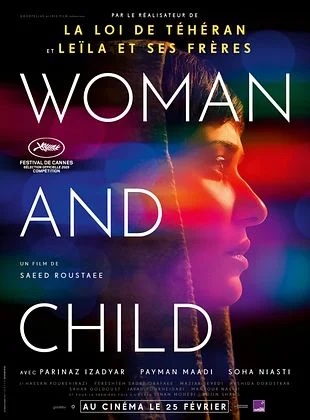
Mahnaz, a 40-year-old nurse, raises her children alone. As she prepares to marry her boyfriend Hamid, her son Aliyar is expelled from school. When a tragic accident turns everything upside down, Mahnaz embarks on a quest for justice to obtain redress.
A contemporary tragedy rooted in the workplace
Saeed Roustaee claims tragedy and grounds it in a setting that dictates its own rules: the hospital. A space of passages, decisions, human costs. He places his two protagonists there because their professions shape their moral codes. Mahnaz heals. Hamid traffics, sells life and bodies, then applies the same logic to his intimate life. He treats relationships as transactions. He gives up one, trades it for another, as if moving pieces across a board.
The love story serves as an entry point, then the narrative observes how a logic of commerce, negotiation and barter infiltrates family life and intimacy. Violence begins there, in this contamination of everyday life.
A single mother and social pressure
From the outset, Roustaee frames Mahnaz within a series of imposed gestures. She “changes her face” to please. She rearranges her life to fit an image. During the visit of her future in-laws, she moves her children elsewhere at Hamid’s request. She erases traces of her own life in order to appear acceptable.
The film speaks about single mothers through actions, through organisation, through anticipation. Mahnaz manages everything, including the façade: what the neighbours see, what her future husband’s family judges, what society tolerates.
Roustaee pushes the diagnosis further: Mahnaz lives in unhappiness before she can even name it.
Iran, a constant presence in the background
The film anchors this story in present-day Iran, down to its everyday reflexes: concealing, arranging, postponing problems, then discovering that the crisis deepens. Roustaee states this clearly in interviews, linking lies and concealment to what he observes in his country. This context extends beyond the family narrative because it explains the circulation of speech and silence. It also resonates with the director’s own situation: Leila’s Brothers was banned in Iran, and Roustaee was sentenced to prison and banned from filmmaking, a sentence later suspended. That reality gives added depth to his gaze on what is shown and what is erased.
Grief and continuing with children
After the accident, Woman and Child changes rhythm. Grief becomes the narrative engine. Roustaee places Mahnaz before a clear alternative: withdraw from the world, or move through loss in order to save the “next generations,” her sister, her daughter, her nephew. Pain triggers a choice of life, more than simple anger.
The final sequence follows that direction: a woman facing a baby, freed from devouring emotions, hatred, jealousy, rivalry, reduced to a single force, love.
Family, secrecy, honour: the domestic tribunal
Lies and corruption appear quickly in the hospital, then spread within the family. Roustaee explicitly connects concealment to Iranian society and shows the damage produced by these collective reflexes.
When tragedy strikes, everyone protects their place, their image, their narrative. Honour becomes a rule that authorises arrangements. Secrecy becomes a tool of power. Mahnaz’s quest for justice moves through a dense material: silences, duties, imposed loyalties.
Men and women: a balance of power
Hamid embodies a logic of control and transaction. Roustaee films him as a coherent cog within a system, the one that dictates what is shown, what is hidden, what is negotiated, what remains unspoken.
Women carry care, children, endurance, sometimes truth, sometimes survival strategies. The film insists on one important point: family solidarity can also take troubled forms. Mehri opens a grey zone, made of loyalties that fracture, possible betrayals, old wounds resurfacing. Roustaee states that he drew inspiration from a lived family story, softened for cinema.
Speech, silence, glances
Roustaee claims to make “talkative” films, rooted in a culture where speech matters, shaped by poetic and religious heritage.
He then seeks breathing spaces through exchanges of glances, often at the end of sequences, allowing emotion to pass differently. He even considered a title centred on looks.
Parinaz Izadyar, holding pain
Roustaee describes Parinaz Izadyar as an actress of immediate precision, capable of embracing a wide spectrum and sustaining long dialogue scenes with rigour.
Mahnaz moves through continuous contradictions: to heal, to remain silent to preserve fragile peace, to yield in order to be accepted, then to confront a loss that makes those concessions unbearable.