REVIEW · CANNES 2026 · OUT OF COMPETITION
La Vénus électrique
by Pierre Salvadori · ★★★☆☆
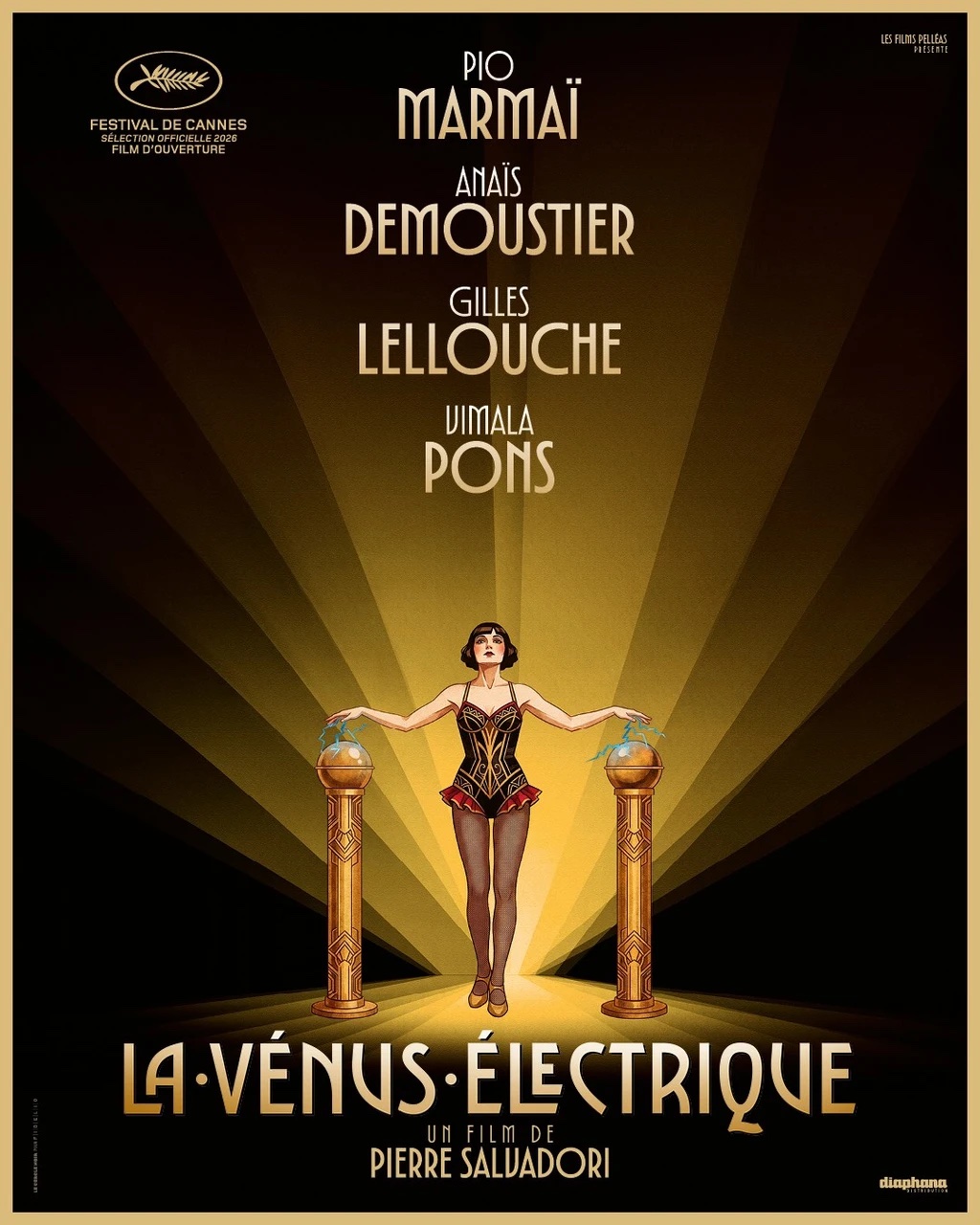
I saw La Vénus électrique at UGC Maillot on opening night of Cannes. After a safe, unsurprising ceremony, the theatre filled up for the film everyone had been waiting for.
Pierre Salvadori delivers his first period romantic comedy. Paris, 1928. Antoine, a painter lost in grief, tries to contact his dead wife through a séance. The medium is actually Suzanne, a fairground performer who improvises to survive. And the con holds, Antoine finds his inspiration again, and Suzanne falls in love with the man she is deceiving.
The film is well acted, often funny, with a few slow patches in the middle. Pio Marmaï is right for the part. Gilles Lellouche, as the loyal, scheming art dealer, steals several scenes. The supporting cast is excellent throughout. Camille Bazbaz’s score accompanies without intruding. You have a good time.
But I struggled with what the film accepts without questioning.
Art made by men, inspired by women
The original idea comes from Robin Campillo and Rebecca Zlotowski. Salvadori also thanks Toledano and Nakache in the credits. Four filmmakers, then, put their hands on this story before him. And this story is, at its core, about artistic creation and who pulls the strings. Suzanne invents everything. She builds the lie that allows Antoine to become a painter again. She does the work. He gets the credit. The film shows this clearly, without ever seeming troubled by it.
The woman who chooses freedom pays the price
What bothers me more is how Suzanne is treated as a character. She is exploited quite brutally, economically and physically, and the film finds this charming. The opening scene at the fairground sets the tone from the first minutes: men pay to kiss the Electric Venus, an electric shock pushes them away. Suzanne earns her living with her body. The film frames this as something picturesque and funny, not as something that weighs on her.
When a woman in the film chooses her own freedom, she pays for it. The woman who plays along gets to stay. La Vénus électrique tells a love story from the point of view of the man to whom everything happens. Salvadori does not do this with ill intent. His cinema is warm and generous. But warmth has its blind spots too.
Seen at Cannes, on opening night
Leaving the theatre, I wanted to watch Peter Jackson’s Beatles documentary that same evening. Cannes, even out of competition, opens appetites. That is already something.
In a word
A well-constructed romantic comedy, often funny, carried by actors at their best. Salvadori in full command of his craft. And beneath the lightness, a blind spot worth naming.
Film details
| Director | Pierre Salvadori |
| Screenplay | Pierre Salvadori, Benjamin Charbit, Benoît Graffin |
| Original idea | Robin Campillo, Rebecca Zlotowski |
| Cast | Pio Marmaï, Anaïs Demoustier, Gilles Lellouche, Vimala Pons, Gustave Kervern |
| Music | Camille Bazbaz |
| Cinematography | Julien Poupard |
| Production | Les Films Pelléas / France 2 Cinéma |
| Distribution | Diaphana Distribution |
| Running time | 102 min |
| Release | May 13, 2026 |
| Cannes 2026 | Opening film – Out of Competition |